
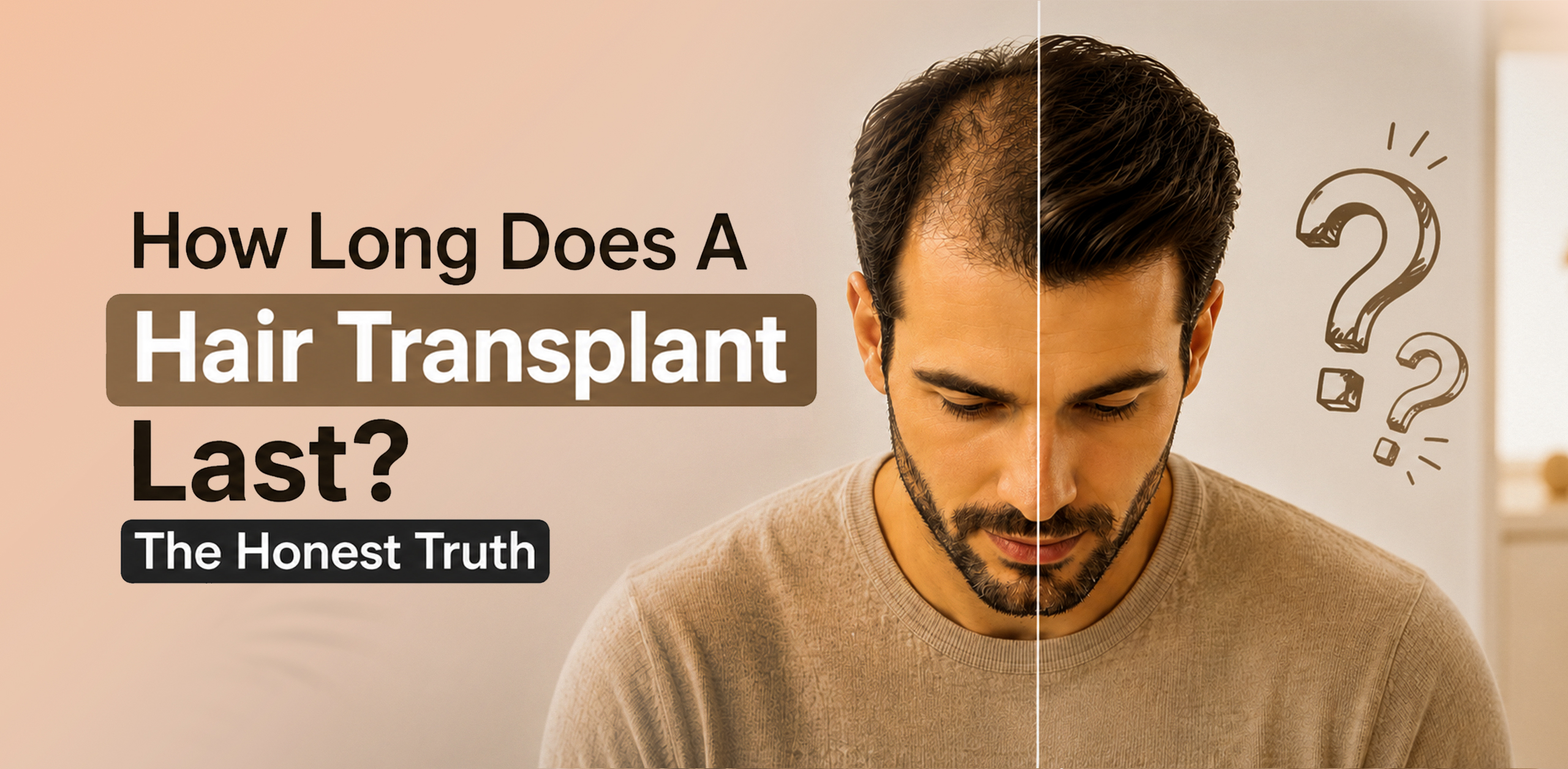
You look in the mirror every morning. You notice your hairline slowly moving back. It feels awful. We completely get it. So many of us struggle with hair thinning. It hurts your confidence. You start looking for quick options. You buy special thickening shampoos. You try different expensive oils. Nothing really works.
Then you hear about actual surgery. You immediately ask a big question. How long does a hair transplant last? You want to know if the money is actually worth it. You need solid facts. You don’t want a temporary fix. We’re here to give you the exact details. Let us talk about permanent hair loss solutions. We want you to know what you can really expect from this journey.
How Long Does a Hair Transplant Last? The Short Answer
The good news is very exciting. Your new hair will likely stay with you forever. Yes, you read that right. A hair restoration surgery is a lifelong fix for most people. The clinic takes healthy hair from the back of your head. We call this specific spot the donor zone. They move these strong hairs to your bald spots. These hairs are truly special. They don’t care about the baldness hormone. Doctors call this nasty hormone DHT. Since surgeons use DHT-resistant hair follicles, your new hair stays totally safe. It grows just like normal hair. You can wash it in the shower. You can brush it. You can cut it at the barber. This makes it a fantastic hair thinning treatment.
How Exactly Does a Hair Transplant Work?
Doctors mostly use a technique called the FUE hair transplant today. We want to break down the surgery day for you. The whole process is actually very straightforward. It usually takes a full day at the clinic. Here is exactly what happens when you sit in the doctor’s chair.
- Numbing The Scalp: First, the doctor prepares your head. They use local anesthesia. Your scalp goes completely numb. You stay awake but you feel absolutely no pain.
- Taking The Donor Hair: Next, the medical team focuses on the back of your head. They carefully remove the DHT-resistant hair follicles. They use a tiny punch tool. They extract these healthy roots one by one.
- Prepping The New Grafts: The clinical staff then takes over. They sort your extracted hairs under a powerful microscope. They clean every single graft. This keeps the root tissue alive and totally healthy.
- Designing Your New Look: The surgeon then moves to your bald spots. They make incredibly tiny cuts in your skin. They angle these cuts perfectly. This ensures your new hair matches your natural hair growth cycle.
- Planting The Hairs: Finally, the team places the hairs. They gently push each cleaned root into the tiny cuts. Your blood supply immediately grabs hold of the new hair restoration grafts. The healing starts that exact same day.
Hair Transplant Timeline: When Will You See Full Results?
You need to stay very patient after the clinic visit. Your head will look red for a few days. Then something scary usually happens. Your new hair will fall out around week 3. Don’ panic though. We promise this is totally normal. Doctors call it shock loss. The root is actually sleeping safely under your skin. New baby hairs will push through after a few months. They start off very thin. They look like peach fuzz at first. They get thicker every single month. You will see a huge change around month 8. You see the final hair transplant success rate after a full year. That’s when the hair looks completely thick and natural.
Can Hair Fall Out Again After a Hair Transplant?
We need to be totally honest with you about the future. The moved hairs stay forever. But your old native hair might still fall out. Surgery does not cure the baldness gene in your original hair. You might keep losing hair right behind the new hairline. This can look a bit strange over time. You might develop a bald patch behind your thick new front hair.
If you’re wondering, “Why is my hair falling out still?” Well, that’s because you’re not taking good care of your overall health. High stress makes hair fall out fast. Sometimes hair sheds for completely different reasons. Are you feeling sick? Are your hormones acting up? Bad diets and poor eating habits also contribute to hair fall. You need to feed your scalp from the inside out. We highly suggest you read our guide on which vitamin deficiency causes hair loss. It explains exactly what nutrients you need daily.
How to Make a Hair Transplant Last Longer?
While your new grafts are permanent, you must actively protect your surrounding hair from future shedding / thinning. Follow these quick steps to maximize your hair transplant success rate:
- Take Hair Loss Medications: Use daily pills or topical treatments to stop your native hair from falling out around the new FUE hair transplant zones.
- Avoid Harsh Styling Chemicals: Wash gently with mild shampoos to protect fragile roots and support your ongoing hair thinning treatment.
- Skip Tight Hats and Caps: Avoid putting direct, heavy pressure on your scalp right after surgery so you do not damage the healing hair restoration grafts.
- Manage Your Daily Stress: Keep your stress levels low to prevent sudden, widespread shedding across your entire scalp.
- Eat a Nutrient-Dense Diet: Fuel your body with vital vitamins to feed your newly planted DHT-resistant hair follicles from the inside out.
Does Age Affect Hair Transplant Results?
Age plays a surprisingly big role in your success. We usually tell young guys in their early twenties to wait. Your hair loss pattern is not finished yet. If you get surgery at twenty, you will probably lose a lot more native hair by thirty. You would definitely need another surgery to fix the new gaps. Good doctors prefer patients who are a bit older. Their hair loss has slowed down significantly. The surgeon can predict the future shape of the baldness. This makes the final design look much better as you get older.
Hairline vs Crown Hair Transplant: Which Lasts Longer?
Where you need hair changes things entirely. Most guys want a brand new front hairline. The skin at the front of your head loves new hair. Blood flows very easily there. The roots catch on really fast. Front hairlines look amazing very quickly.
The top back of your head is called the crown. The skin up there is much thicker. The blood moves a bit slower in that area. Hair also grows in a weird circle pattern on the crown. Surgeons have to work much harder to make it look thick. Crown surgeries definitely last a lifetime. But they take way longer to grow properly. You might wait eighteen full months to see the final result on your crown. Just keep that timeline in mind.
Frequently Asked Questions
Does a hair transplant look completely natural?
Yes. Modern doctors are basically artists. They place every single hair at the perfect angle. It matches how your real hair lays naturally. Nobody will ever guess you had work done. It blends perfectly.
Can I go completely bald again after a hair transplant?
No. You will never be totally bald again. The hairs they move are genetically immune to going bald. They stay rooted in your scalp for your entire life. They are safe.
Do I need to take medication forever after the procedure?
You probably will. The medication does not do anything for the new hairs. It keeps your old, original hairs from dying and falling out behind the new ones. It protects your look.
Is the hair transplant procedure painful?
You will barely feel a thing. The clinic gives you numbing shots first. You stay awake the whole time. You can watch a movie or listen to music while they work on you. It is very easy.
Wrapping Up
Ultimately, we know you want a permanent answer to your hair thinning. A hair transplant delivers exactly that. By utilizing strong, healthy grafts, this procedure ensures you can finally step away from temporary fixes. Just remember to choose a skilled surgeon, stick to your aftercare plan, and maintain a healthy lifestyle. Your new hair is built to stay with you for life.