
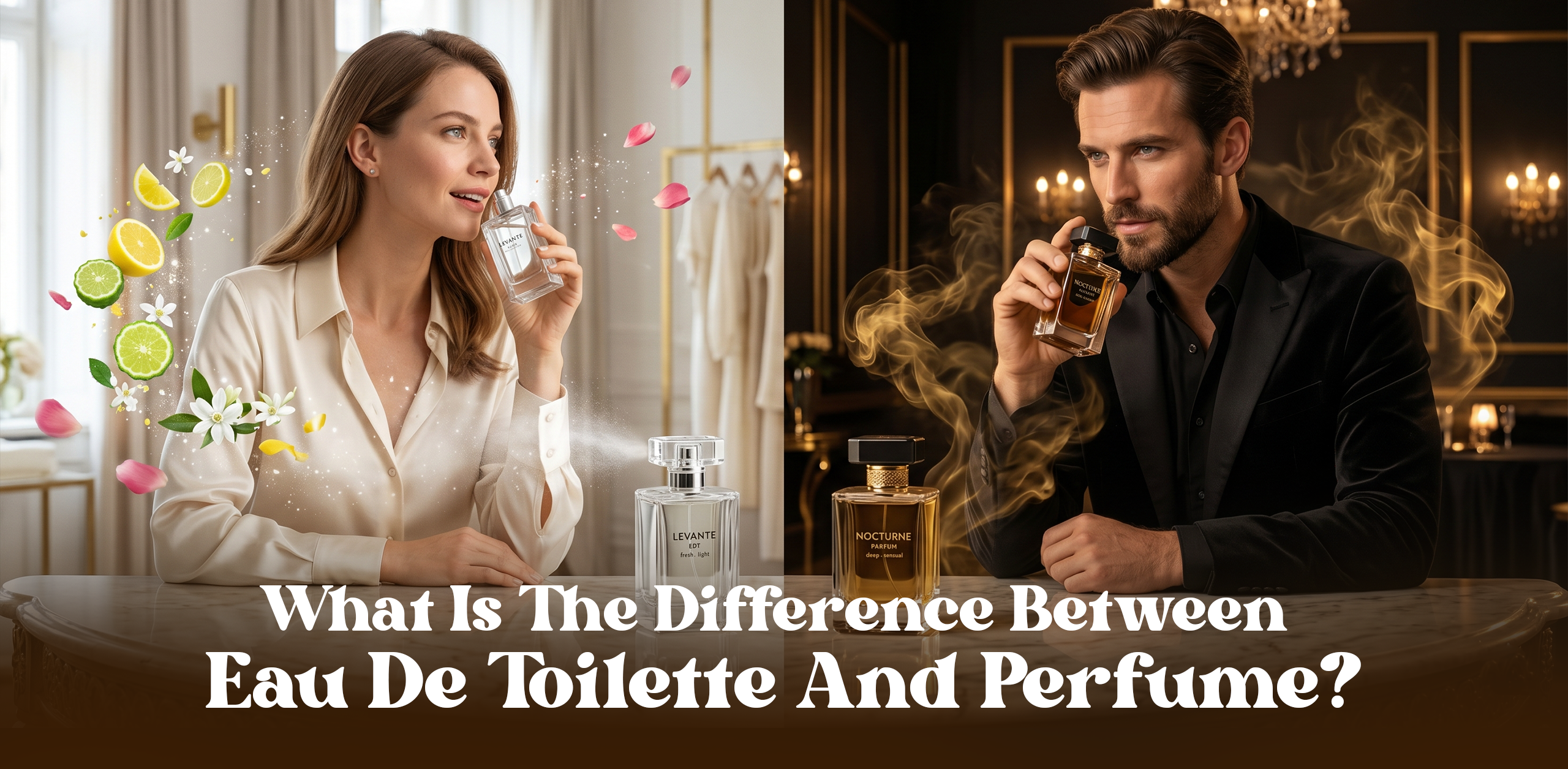
You stand at the fragrance counter feeling totally lost. We know the struggle of staring at beautifully designed bottles while the salesperson speaks in confusing riddles about scent profiles. You just want to smell great without wasting your hard-earned money. But look. We’re here to finally crack the code. Let’s find out what’s the real difference between eau de parfum and eau de toilette
The Core Difference Between Eau De Toilette And Perfume
Let’s get right into the main event. The biggest difference between these two fragrance types is the concentration of pure eau the perfume oil in the alcohol-and-water base. It sounds simple because it actually is. But here’s the thing. That tiny change in the chemical ratio completely transforms how a fragrance performs on your skin throughout the day.
Pure perfume (or Extrait de Parfum if we want to use the highly specific French terminology) packs a massive punch of raw aromatic compounds. We’re talking about anywhere from 20% to 30% pure fragrance oils. That’s huge. Eau de Toilette sits way lower on the concentration scale. It usually contains around 5% to 15% fragrance oil. And that makes a world of difference.
You might think that buying the strongest possible option is always the smartest financial move because you desperately want your new signature scent to last through your entire morning commute and your endless afternoon meetings and maybe even a dinner date afterward without needing a touch-up. Think again friend. Sometimes less is more.
Deep Dive Into Pure Perfume (Extrait de Parfum)
We need to talk about the absolute king of the fragrance world. Eau the perfume is rich, intense, and incredibly luxurious. (It’s also insanely expensive). When you apply a true perfume, you only need the tiniest little dab on your pulse points to create a powerful scent bubble that lasts anywhere from eight to twelve hours straight. It really is that strong. The beauty of pure perfume lies in its heavy reliance on base notes. These are the deep, grounding scents, like rich sandalwood or sweet vanilla, that stick to your skin like glue.
Because there’s way less alcohol in the formula, pure perfume is actually fantastic for people dealing with sensitive skin. Alcohol can severely dry out your skin barrier and cause annoying redness. We always recommend pure perfume if you struggle with irritation. But look. You have to remember that wearing an incredibly heavy perfume in the dead heat of a humid summer day can be totally suffocating for every single person standing around you. It gets overwhelming.
Understanding Eau De Toilette (EDT)
Anyway, back to Eau de Toilette. This is exactly what you probably have sitting on your dresser right now. (Most designer fragrances sold in major department stores fall right into this highly popular category). EDT is specifically designed to be highly approachable and wonderfully easy to wear for just about any casual occasion. The higher alcohol content means the fragrance projects strongly the exact second you spray it. It hits the air instantly. You get a massive, beautiful blast of those sparkling top notes like zesty citrus or fresh lavender. It smells amazing right away.
But that initial magic fades pretty fast. We usually see Eau de Toilette lasting around three to five hours on the skin before it completely disappears. The International Fragrance Association (IFRA) heavily regulates the safety of these specific alcohol-to-oil ratios. This ensures the cosmetic products we use daily won’t cause massive allergic reactions. You can trust that standardised EDTs from reputable brands are thoroughly tested for safety. And they’re totally perfect for wearing to the office or tossing in your gym bag.
Sillage, Projection, And The Olfactory Pyramid
Let’s break down some technical industry concepts so you can shop like a total pro next time. We promise to keep it simple. You need to understand how top notes and heart notes, and base notes work together to build a complete olfactory pyramid. (That’s just a fancy industry term for how a scent changes and evolves over time on your skin).
When you first spray an Eau de Toilette, the top notes explode violently. They’re bright and loud. Pure perfume skips that loud opening and goes straight to the rich heart and base notes. Then there’s the fascinating concept of sillage. Sillage is the invisible trail of scent you leave behind when you walk past someone in a quiet hallway. Eau de Toilette creates a huge sillage trail for the first hour of wear. Pure perfume stays much closer to your body. It creates an intimate bubble. People only smell it when they lean in close. We honestly prefer that intimate vibe for romantic evenings.
Industry Standards And Real Fragrance Quality
We want you to know exactly what you’re paying for. The global fragrance industry is firmly anchored in historic places like Grasse, France. (They call it the perfume capital of the world for a very good reason). Master perfumers over there spend years learning how to carefully extract essential oils from delicate flowers using complex distillation methods. When you buy a high-quality pure perfume, you’re directly paying for those premium, natural extractions.
Cheaper Eau de Toilette options often rely heavily on synthetic aroma chemicals to loosely mimic the smell of real flowers. There’s absolutely nothing wrong with safe synthetics. They keep our favourite daily scents affordable. But the depth and sheer complexity of a natural jasmine absolute in a pure perfume simply cannot be matched by a cheap lab-created substitute. You can smell the difference in quality immediately. It’s night and day.
How to Pick The Right Fragrance For Your Lifestyle?
1. Stick to light citrus or fresh notes for small offices and save the heavy musks for open-air events.
2. Pick zesty, aquatic scents for the gym and warm, spicy ambers for late-night dinners.
3. Wear airy florals in the summer heat and rich, woody scents to cut through the winter cold.
4. Always spray your skin instead of paper to see how the scent reacts with your natural chemistry.
5. Pair minimalist linen outfits with clean scents and bold, edgy fashion with complex fragrances.
6. Pick an Eau de Parfum for long workdays and a lighter Eau de Toilette for quick errands.
Can’t decide between Armaf and Lattafa? Check out our comparison guide and discover which brand is the better match for your fragrance style.
Frequently Asked Questions
Can Eau de Toilette and perfume be worn at the same time?
Yes, fragrance layering has become very common these days. You can carefully dab a rich perfume on your warm pulse points and then lightly mist a complementary Eau de Toilette right over your clothes. Just make sure the scent notes play nicely together. Don’t mix a super heavy smoky scent with an incredibly sweet fruity one. It gets messy.
Why does my Eau de Toilette disappear so quickly?
It honestly comes down to your personal skin hydration levels. Dry skin absorbs fragrance oils incredibly fast. (It literally drinks the oils right up). If you want your fresh EDT to last a lot longer, we highly recommend applying an unscented body lotion right before you spray your perfume. The thick lotion gives the fragile fragrance molecules something solid to grab onto. It works wonders.
Is Eau de Parfum the exact same thing as pure perfume?
Nope. Eau de Parfum (EDP) is the happy middle ground. It sits right between Eau de Toilette and pure perfume on the global concentration scale. EDP usually contains around 15% to 20% actual fragrance oil. We firmly find that EDP is the absolute sweet spot for most normal people. It offers truly great longevity without the massive, terrifying price tag of a true Extrait de Parfum.
Our Final Thoughts On The Great Scent Debate
The beauty counter is safe now. No more cold sweats. You know the drill. High oil means deep notes. Long hours. More alcohol means a quick, loud blast. That’s the whole secret right there. Nobody can hustle you now. But we need you to forget the rules for a second. Buy what you actually like. Scent is completely weird. Your own skin chemistry changes everything. (It really does). A cheap bottle might smell like pure magic on your wrist. An expensive one might smell awful. Who cares. We just want you to spray it. Walk around. See how it feels. Buy that one.